
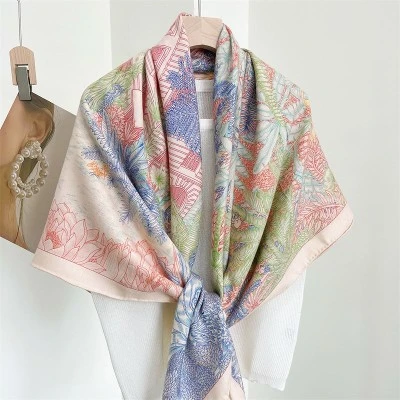
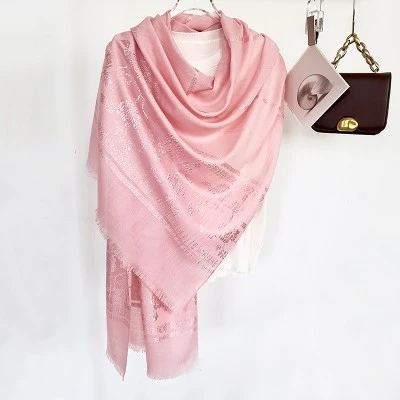
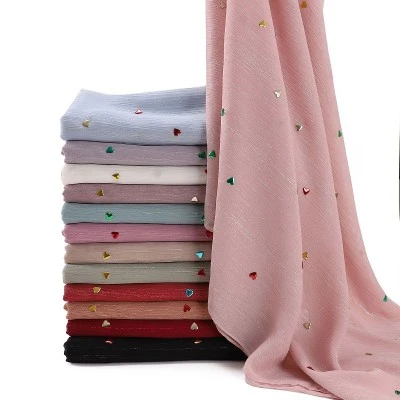
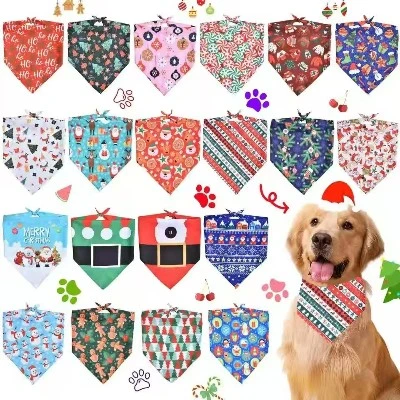

Most people own a scarf they never wear. Not because they dislike it - because they are not sure what to do with it. A scarf is the highest-margin accessory in most apparel ranges and the one most often left in a drawer.
The reason is simple: scarves do not come with instructions. And the single variable that determines what you can do with a scarf is not the pattern or the price - it is the size. A 65cm square and a 190cm wrap are two entirely different garments wearing the same name.
Here is how to match the size to the look, and how to build a range around it.

1. The Classic Neck Knot - 50–65cm
The bandana knot. Fold the square diagonally into a triangle, roll it from the pointed tip toward the folded edge until you have a band of the width you want, wrap it around the neck and tie a double knot at the front. Slide the knot slightly to one side for a less symmetrical line.
This is the most wearable size in the category: small enough not to overwhelm a light outfit, substantial enough to read as a deliberate styling choice. It works open over a T-shirt, tucked under a coat collar, or knotted loosely over a shirt.
Best in: cotton (holds the roll and the knot), lightweight silk, polyester gauze.
2. The Headband or Hair Tie - 50–70cm
Fold into a triangle, roll into a narrow band, and tie either at the nape under loose hair or on top of the head as a band. Alternatively, weave a rolled bandana through a braid or wrap it around a ponytail.
This is the look that drives social media sharing, which is why small squares sell so well to younger demographics and festival-season assortments.
Best in: cotton (grips the hair better than slippery silk), crinkle chiffon.
3. The Bag Handle Accent - 50–70cm
The lowest-effort and most underrated use. Roll or fold a small square and knot it around a handbag handle, or tie it loosely so it hangs as a charm. It adds colour to an expensive plain bag without committing to wearing the print.
For retailers this is worth pointing out in product copy - it converts customers who like the pattern but would not wear it as a scarf.
Best in: small squares with strong, graphic prints; foil-finished styles catch light well here.
4. The Triangle Drape - 90cm
The classic square-scarf look. Fold diagonally into a triangle, place the point at the front, bring the two ends around the neck and either tie them at the back or cross them and bring them forward. The point should sit centred on the chest.
This is the size that made the silk square famous. It is large enough to be seen, structured enough to hold a shape, and it reads as polished rather than casual.
Best in: silk twill at 12–14 momme - it holds the fold without stiffness and carries print colour with real saturation.
5. The Shoulder Wrap - 110–130cm
Open the scarf fully and drape it over both shoulders, either hanging straight or crossed at the front. It functions as a light layer for evenings, air-conditioned interiors and resort wear, and it transforms a simple dress or tank top into an outfit.
At this size the scarf stops being an accessory and starts acting like a garment.
Best in: silk georgette, silk chiffon, fine polyester voile - fabrics with enough drape to fall rather than stand away from the body.
6. The Full Head Wrap - 130cm+
Fold into a triangle, place the folded edge across the forehead, draw the fabric over the head and secure under the chin or at the nape. Larger squares give more coverage and more styling options for wrapping, layering and pinning.
This is the core modest-wear silhouette, and the reason 130cm squares are a category of their own rather than simply a larger version of a 90cm.
Best in: polyester crepe and chiffon - they hold a wrap without slipping and stay comfortable through a full day's wear.
7. The Loop and Drape - 170–190cm
The cold-weather standard. Drape the scarf around the neck with both ends in front, then either loop once for a Parisian knot, throw one end back over the shoulder, or simply let both ends hang.
Length is what makes this work - the longer the scarf, the more ways it can be arranged, and the more volume it adds around the face and shoulders.
Best in: acrylic and brushed polyester for warmth, wool blends for premium programmes, silk for a dressier winter look.
Matching fabric to the look
|
Fabric |
What it does well |
Avoid using it for |
|
Silk |
Drapes, shines, regulates temperature |
Heavy casual knots - it slips and shows creases |
|
Cotton |
Holds a knot, breathable, softens with washing |
Formal drape - it reads too matte |
|
Polyester chiffon / voile |
Sheer, fluid, colourfast, easy care |
Cold-weather warmth |
|
Acrylic / brushed |
Warm, lofty, wool-like without the itch |
Summer - it is a cold-weather fabric |
A season-by-season shortcut
|
Season |
Size |
Fabric |
Go-to look |
|
Spring |
90cm |
Silk twill, chiffon |
Triangle drape |
|
Summer |
50–70cm |
Cotton, gauze |
Headband, bag accent |
|
Autumn |
130cm |
Brushed, acrylic, blends |
Shoulder wrap |
|
Winter |
180–190cm |
Acrylic, wool blends |
Loop and drape |
For retailers and brands: how to build a scarf range
If you are assembling a scarf category rather than buying a single style, size coverage matters more than pattern variety. A balanced range usually covers three tiers:
|
Tier |
Size |
Role in the range |
|
Entry / impulse |
50–70cm |
Low price point, gift-with-purchase, multipacks, checkout placement |
|
Core / margin |
90cm |
The hero sizes - highest perceived value, carries the print story |
|
Seasonal / premium |
130–190cm |
Higher ticket, weather-driven demand, modest wear and wrap categories |
Three practical points we share with buyers planning a first range:
Stock the small sizes for frequency, not margin. A 65cm bandana will not deliver the unit profit of a 90cm silk square, but it sells in multiples - customers buy three colours at once.
Let the 90cm carry your brand. It is the size customers photograph and remember. If your budget only supports one developed print, put it here.
Run one neutral and one statement colorway per size. Most customers cannot visualise a print on themselves; giving them a safe option alongside a bold one raises conversion without doubling your development cost.
We manufacture across the full size range - 50cm bandanas through 190cm wraps - in silk, cotton, polyester and acrylic, with printed styles starting from 50 pieces per colorway. Our in-house team can adapt an existing design into a full size family, or develop prints from your artwork.
[Contact us to build your scarf range →]
Common questions
What size scarf should I buy if I only want one? 90cm. It is the most versatile single size - it drapes, knots, and wraps, and it works across more outfits than either a small bandana or a very long wrap.
Why does my silk scarf keep slipping? Silk is naturally slippery. Choose 14 momme twill over 6mm chiffon for knots that need to hold, or use a scarf ring or small pin to secure it.
Can a 90cm scarf work as a shoulder wrap? Only just, and only on a smaller frame. For a proper wrap, go to 130cm or above.
How do I stop a scarf from looking bulky? Match the fabric weight to the knot. Fine chiffon and light cotton roll small; heavy brushed fabrics suit open drapes rather than tight knots.


