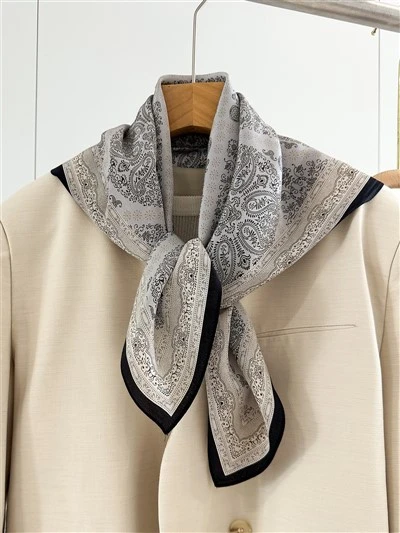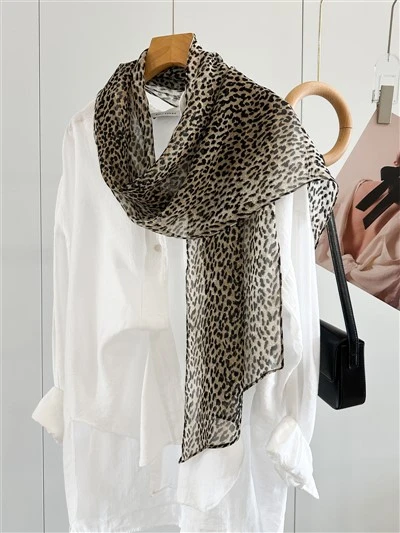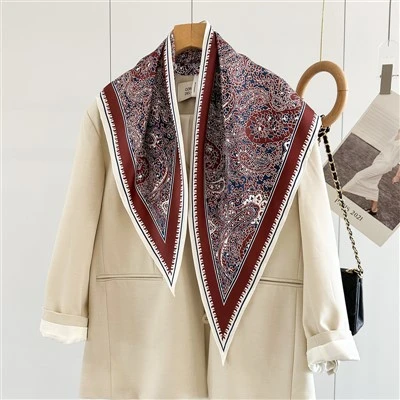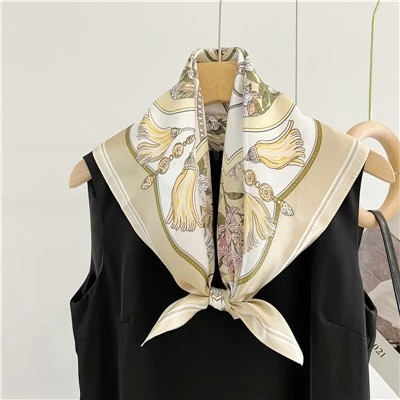

During the Ming and Qing dynasties, the 'yunjian' (cloud-shaped shoulder cape) became popular for social occasions such as weddings and celebratory banquets, serving as a key accessory for women-particularly young women on their wedding day.
Shoulder capes also play a significant role in the attire of China's ethnic minorities; for instance, the sheepskin cape worn by Naxi women (known as *you'e* in the Naxi language) is a distinctive feature of their traditional dress. Characterized by a design that is square at the top and round at the bottom, it is adorned with circular fabric discs symbolizing the sun and moon, alongside seven colorfully embroidered discs representing the Big Dipper-embodying the poetic imagery of "bearing the sun and moon on the shoulders and carrying the Big Dipper on the back."
In the realm of performing arts, the shoulder cape serves as a vital prop. In Spanish flamenco, for example, dancers frequently utilize the "Manila shawl"-which originated in China-where its long fringes sway with the dance movements, enhancing the performance's dramatic flair and visual appeal.
In modern fashion, the shoulder cape has made a comeback as a trendy item. At the AW25 Shanghai Fashion Week, designers reimagined the cape, blending traditional Chinese elements with contemporary structural designs that emphasize shoulder silhouettes and the fluidity of the body.
As an element of intangible cultural heritage, the *yunjian* is also being creatively passed down through educational activities for young people; for example, at a youth-focused intangible cultural heritage showcase in Shanghai, young participants walked the runway wearing *yunjian* capes they had designed and crafted themselves.