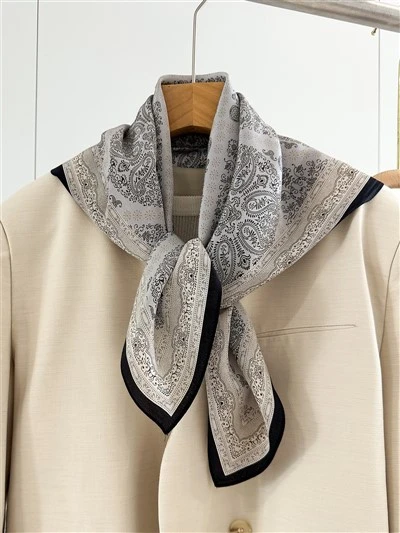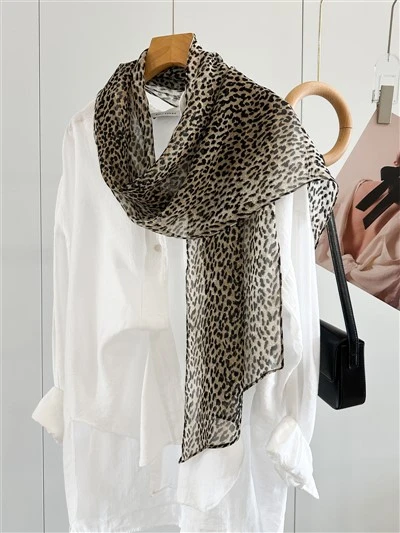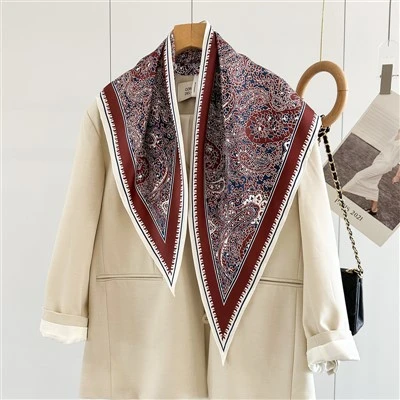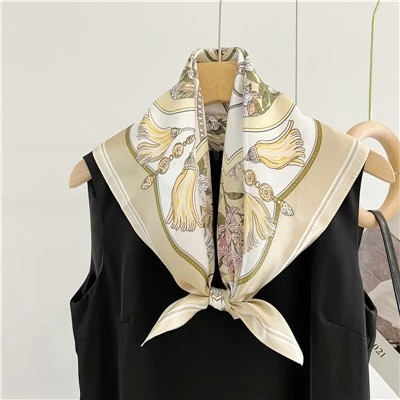

The natural skin-friendliness of cotton fibers stems from their porous structure and the abundance of hydroxyl groups within their cellulose molecular chains; these microscopic characteristics allow cotton to rapidly absorb moisture and release it slowly, creating a slightly breathable, temperature-regulating buffer layer. In the 20°C–25°C temperatures of spring and autumn, the neck and shoulder areas-while metabolically active-are vulnerable to drafts; fabrics that are too thick can cause stuffiness, whereas overly thin synthetic materials tend to generate static electricity and cling uncomfortably to the skin.
Small square scarves made from high-count cotton (such as 100% combed cotton) feature an optimal weight (approximately 60–85 g/m²). They retain a layer of air to maintain localized warmth without hindering the dissipation of moisture from the skin's surface, making them a rare example of a "breathable" accessory worn close to the body. Medical observations also indicate that gently wrapping the area over the superficial veins on the side of the neck helps alleviate muscle tension caused by prolonged sedentary office work.